
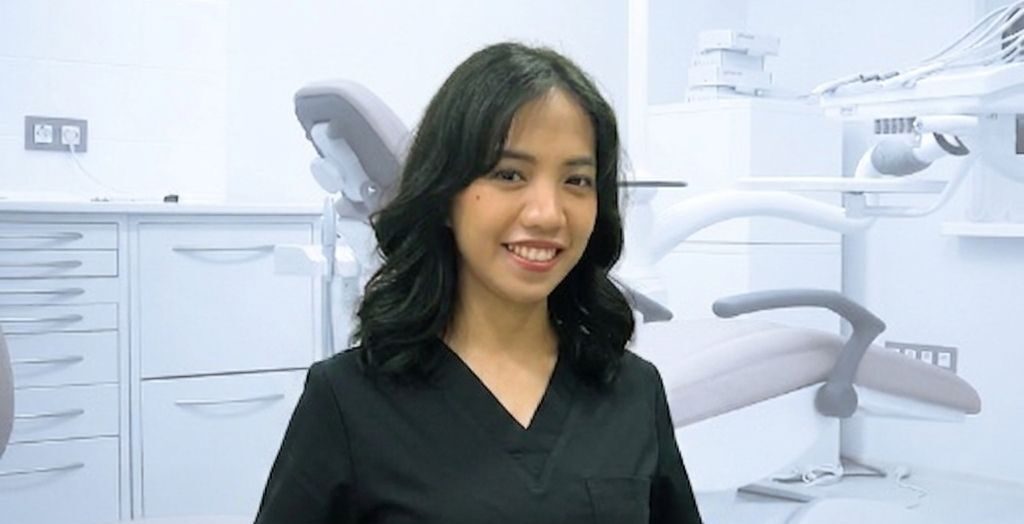
Interview with Dr Maria Yuniaty, Sp.KG from Uluwatu Dental Clinic
1. Can you tell us about your dental background and what inspired you to pursue a career in dentistry?
I graduated as a General Dentist before completing my specialist training in Conservative Dentistry (Endodontics) at the Faculty of Dentistry, Universitas Gadjah Mada, graduating in April 2022.
Throughout my career, I’ve become increasingly passionate about saving natural teeth whenever possible. One thing I often tell my patients is that teeth are very different from our skin. If we cut our skin, our body can heal itself. Teeth don’t have that ability. Once a tooth is damaged by decay or infection, it won’t repair itself naturally.
That’s why I believe prevention is always the best treatment. But when damage has already occurred, my goal is to preserve the patient’s natural tooth for as long as possible using modern restorative and endodontic techniques.
I’ve been working in one of Bali’s international hospitals for the past three years, treating both local and international patients. During that time, I frequently managed complex endodontic cases referred from other dentists and clinics, including Uluwatu Dental Care. I’m excited to now be part of the Uluwatu Dental Care team, where I can provide specialist endodontic care directly within the clinic.
2. What areas of dentistry or treatments do you specialise in, and which procedures are you most passionate about?
I specialise in Conservative Dentistry, with a particular focus on restorative dentistry and endodontic treatment, commonly known as root canal treatment.
One philosophy has guided me throughout my career: if a natural tooth can be saved, it should be saved. Modern dentistry offers excellent replacement options such as dental implants and dentures when necessary, but nothing can truly replace the biology, function, and natural feeling of a healthy tooth. That’s why my first priority is always to preserve a patient’s own tooth whenever it is clinically possible.
Many people think a root canal is simply about relieving pain, but for me it’s about giving a tooth a second chance. By treating infection, preserving as much healthy tooth structure as possible, and restoring the tooth properly, we can often save teeth that patients thought would need to be extracted.
I’m passionate about treating complex root canal infections, restoring heavily damaged teeth, and helping patients keep their natural teeth whenever possible. Every successful case where we can preserve a patient’s own tooth instead of removing it is incredibly rewarding—not only because we’ve eliminated pain and infection, but because we’ve protected something that no artificial replacement can fully replicate.
Of course, there are situations where a tooth simply cannot be saved. In those cases, modern treatments such as dental implants or other prosthetic solutions can provide excellent long-term outcomes. However, before recommending extraction, I always explore every appropriate option to preserve the patient’s natural tooth, because whenever it is clinically possible, saving the natural tooth remains the best treatment.
My goal isn’t just to fix a tooth for today—it’s to help my patients keep their natural smile healthy and functional for as many years as possible.
3. How do you approach patient care and safety, particularly for patients travelling internationally for dental treatment?
Patient safety always comes first.
Every treatment begins with a careful diagnosis. Before recommending any procedure, I need to fully understand the condition of the tooth, the patient’s medical history, and their overall health.
For international patients, treatment planning is especially important because complex endodontic treatment often cannot be completed in a single appointment. Depending on the severity of the infection, several visits may be required to achieve the best long-term result.
That’s why I always encourage patients to contact us before travelling to Bali. By discussing their symptoms, sharing X-rays if available, and understanding their travel schedule, we can develop a realistic treatment plan that fits both their dental needs and their holiday itinerary.
Good planning leads to better outcomes, especially for treatments that require multiple visits.
4. How do you work with patients to understand their goals and create a treatment plan that is right for them?
Every patient is different, so I never assume that one treatment fits everyone.
Normally, the ideal starting point is a comprehensive examination and consultation because this gives us the most accurate diagnosis and allows us to create the best treatment plan.
However, I also understand that many of our international patients live overseas and can’t visit us until they arrive in Bali.
In those situations, detailed communication becomes extremely important. I encourage patients to send us any recent X-rays, photographs, previous dental records, and a clear description of their symptoms before travelling.
The more information we receive, the better we can prepare, discuss possible treatment options, estimate the number of appointments required, and help patients plan both their treatment and their holiday more effectively.
I believe treatment planning is a collaborative process. The more openly we communicate before a patient arrives, the smoother and more predictable the entire treatment journey becomes.
5. How do you ensure patients feel supported and comfortable throughout their dental journey, from their initial consultation through to aftercare?
Many patients become anxious when they hear the words “root canal treatment.”
One of my most important responsibilities is helping patients understand what is actually happening and explaining each step of the procedure in a calm and reassuring way.
When patients understand why treatment is necessary and what they can expect, they usually feel much more relaxed.
Throughout treatment, I make sure patients know exactly what we’re doing, how the tooth is responding, and what the next steps will be.
After treatment, we provide detailed aftercare instructions and continue to support patients throughout their recovery. Our goal is not simply to complete the procedure, but to achieve a healthy, comfortable tooth that will continue to function well for many years.
6. What has been the most rewarding experience or memorable moment in your career as a dentist so far?
One of the most rewarding aspects of my career is seeing patients keep a tooth they believed was beyond saving.
Many patients come to me expecting that extraction is their only option. Seeing their relief when we can successfully eliminate the infection, preserve the tooth, and restore normal function is incredibly satisfying.
I’m also very happy to join Uluwatu Dental Care because this partnership has developed naturally over the years. Before joining the clinic, UDC frequently referred complex endodontic cases to me through the international hospital where I worked.
Now that I’m part of the UDC team, patients can receive comprehensive specialist endodontic care in one place without the inconvenience of being referred elsewhere. This is particularly valuable for international patients, who often have limited time while visiting Bali.
7. What advice would you give to someone considering travelling overseas for dental treatment for the first time?
If you’re planning to travel to Bali specifically for dental treatment, my biggest advice is to contact your dental clinic as early as possible.
The more information you can provide before travelling—including your symptoms, dental history, medical history, medications, previous treatment, and any recent X-rays—the better your dentist can prepare your treatment plan.
For more complex procedures such as root canal treatment, timing is extremely important because treatment may require more than one visit depending on the condition of the tooth. By discussing your travel plans with us in advance, we can schedule your appointments appropriately and help avoid unnecessary delays or interruptions.
Good communication before you travel is one of the most valuable parts of successful dental treatment abroad. Even when an in-person consultation isn’t possible, detailed conversations, photographs, and dental records allow us to provide meaningful guidance and prepare a personalised treatment plan before you arrive.
With good planning, patients can receive the care they need while still enjoying their time in Bali with confidence and peace of mind.


