
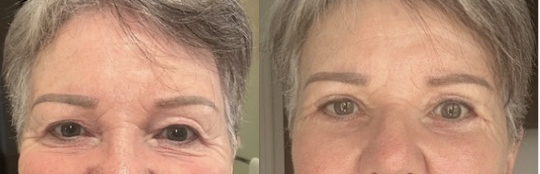
A blepharoplasty is a surgical procedure that removes or repositions excess skin, fat, and sometimes muscle from the eyelids to create a more refreshed and youthful appearance. In some cases, it can also improve vision when heavy upper eyelid skin begins to obstruct sight.
During the procedure, small incisions are made in natural eyelid folds or inside the eyelid to remove or reposition tissue. This helps smooth puffiness, reduce drooping skin, and restore a brighter, more open eye appearance. Scars are typically well hidden within the natural eyelid crease or inside the eyelid.
Blepharoplasty can be performed on the upper eyelids, lower eyelids, or both, depending on the patient’s concerns and desired outcome.
Types of Blepharoplasty
Upper Blepharoplasty
This procedure focuses on the upper eyelids and is commonly performed to treat:
- Drooping or hooded eyelids
- Excess skin covering the natural eyelid crease
- Vision obstruction caused by heavy eyelids
During surgery, an incision is made along the natural eyelid crease. Excess skin and sometimes fat are removed, and the eyelid is carefully reshaped to create a more open and refreshed appearance.
Lower Blepharoplasty
Lower eyelid surgery targets under-eye bags and puffiness.
The incision may be placed just below the lower lash line or inside the eyelid. Fat may be removed, repositioned, or redistributed to smooth the under-eye area and reduce puffiness while maintaining a natural contour.
Common goals include:
- Reducing under-eye bags
- Smoothing hollows and shadows
- Creating a more youthful lower eyelid contour
Combination Upper and Lower Blepharoplasty
Some patients choose to treat both the upper and lower eyelids at the same time for a more complete rejuvenation of the eye area. Treating both areas together can provide a more balanced and refreshed overall result.
Recovery Time
Recovery will vary slightly between patients, but typical timelines include:
First 48 hours
- Mild swelling and bruising begin
- Cold compresses and rest are recommended
- Keeping the head elevated helps reduce swelling
First 7–10 days
- Stitches are usually removed within 5–7 days
- Many patients feel comfortable returning to work after about one week
1–2 weeks
- Bruising and swelling improve significantly
4–6 weeks
- Most swelling has resolved and normal activities can be resumed
Final results continue to refine over several months as the tissues fully settle.


